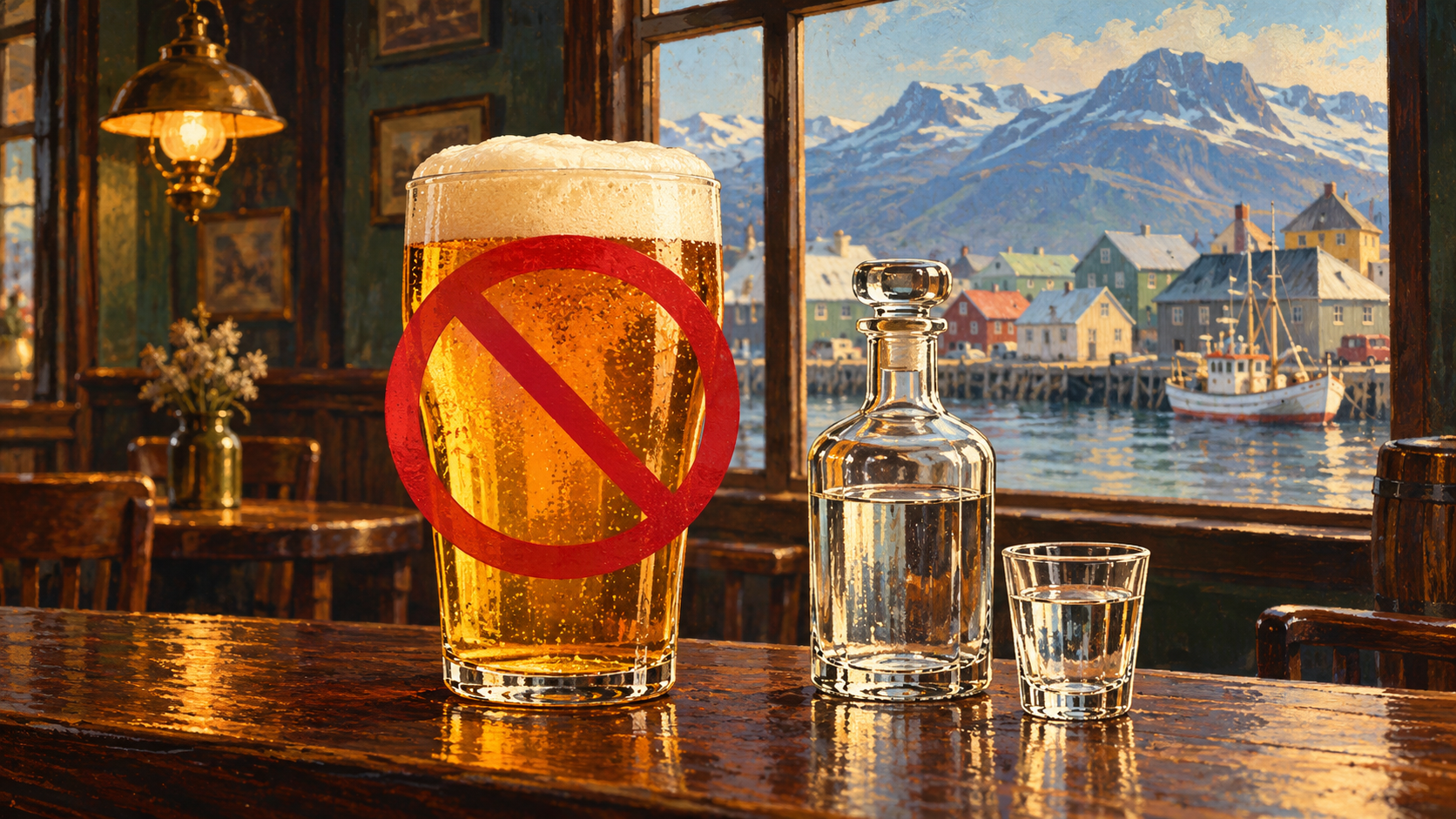
Wine returned. Spirits followed. An ordinary beer had a much longer wait.
The Iceland beer ban sounds like a story someone made up at the pub: for decades, you could legally buy spirits in Iceland, but not an ordinary full-strength beer. The restriction finally ended on 1 March 1989, after 74 years.
There is an important detail behind that headline. Weak beer was allowed; the ban that survived into the late twentieth century covered beer containing more than 2.25% alcohol by volume. And prohibited did not mean nobody ever managed to get hold of it.
So why did the weaker drink remain off the shelves long after stronger alcohol returned? The answer involves temperance politics, a trade dispute and a remarkably persistent fear of what beer might lead to.
How the Iceland beer ban began
The story started with a wider campaign against alcohol. In a 1908 referendum, voters supported prohibition. Restrictions were introduced in stages, with the ban on alcohol sales taking effect in 1915.
Beer was initially part of that broader prohibition. It was not singled out from the beginning while spirits carried on as normal. The strange distinction emerged as Iceland gradually relaxed the rules.
How fish helped bring wine back
The first major exception had more to do with exports than thirsty customers. Spain was a market for Icelandic salted fish, and Spanish wine was caught on the other side of the prohibition rules.
A dispute over that trade helped open the door to wine imports in 1922. ÁTVR, Iceland’s state alcohol retailer, describes the connection between Icelandic salt cod and Spanish wine in its own history.
It is a wonderfully unlikely chapter in beer history: fish helped wine return to Iceland. Beer, however, remained outside the deal.
Why were spirits allowed but beer was not?
A second referendum in 1933 backed an end to prohibition. From 1 March 1935, the wider restrictions were lifted, but full-strength beer remained excluded. The referendum and the return of legal spirits sales were separate events, two years apart.
Supporters of the beer ban feared that an accessible, relatively low-alcohol drink would draw more people into drinking, particularly young people. Beer was portrayed as an entry point to stronger drinks and greater overall consumption.
Keeping beer prohibited also appears to have helped secure political support for lifting the wider ban. Sociologist Helgi Gunnlaugsson discusses this compromise in his University of Iceland explanation of why beer was treated differently.
To opponents, the inconsistency was obvious: why permit spirits but forbid ordinary beer? To supporters, the issue was the drinking habits beer might encourage. The dispute was about more than the alcohol percentage printed on a bottle.
Did Icelanders really go 74 years without beer?
No. Low-strength beer was available, and full-strength beer also reached Iceland through limited duty-free allowances, smuggling and home brewing. Researchers documented these routes before legal sales began.
That makes “a country without beer” a misleading description. A more accurate picture is a country where ordinary legal access to full-strength beer was restricted, while some people could still obtain it.
The distinction matters. A ban on sales and an absence of drinking are very different things.
What finally ended the ban?
During the 1980s, support for change grew. More travel and contact with other countries made beer drinking less unfamiliar, while pressure to legalise sales increased.
The final debate was far from unanimous. Commercial interests, politicians and medical professionals argued over what legal beer would mean. Even doctors disagreed: some warned about increased consumption, while others supported reform.
Parliament passed the legislation in May 1988. Legal sales began on 1 March 1989. These dates are sometimes blurred together, but the decision and the first day of sales were not the same event.
Beer entered the regulated alcohol market, including state monopoly shops and licensed venues. The change ended the special prohibition on full-strength beer; it did not remove alcohol regulation altogether.
Why Iceland celebrates Beer Day
The anniversary is celebrated on 1 March as Beer Day. It marks the return of legal beer sales in 1989, rather than an ancient brewing festival.
For a drink usually associated with ordinary evenings, it is an unusually precise birthday. In Iceland, ordering a normal beer became a milestone worth remembering.
Iceland’s beer ban: the key dates
- 1908: Voters support alcohol prohibition.
- 1915: The ban on alcohol sales takes effect.
- 1922: Wine imports return.
- 1933: Voters back ending prohibition.
- 1935: Spirits sales return; full-strength beer remains prohibited.
- 1988: Parliament approves legalising beer.
- 1 March 1989: Legal sales begin.
Quick answers
Was all beer banned in Iceland?
No. The later restriction applied to beer above 2.25% ABV. Weaker beer was permitted.
Why did the beer ban last so long?
Temperance politics and concerns about beer encouraging more drinking sustained it. Political compromise helped preserve the exception when wider prohibition ended.
When did beer become legal in Iceland?
Sales of full-strength beer became legal on 1 March 1989, following legislation passed in 1988.
A spirits bottle could make it through the rules while an ordinary beer could not. That is what makes this story so memorable: sometimes the strangest thing about a beer is the law standing between it and your glass.
Would you have expected beer to be the last drink Iceland allowed back?
Sources and further reading
- ÁTVR: Brief history of Iceland’s state alcohol retailer
- Helgi Gunnlaugsson: Iceland’s Peculiar Beer Ban, 1915–1989 (2017)
- University of Iceland: Why was beer banned while other alcohol was allowed? (in Icelandic)
- Hildigunnur Ólafsdóttir: The controversial discourse on beer in Iceland (2012)
- Ólafsdóttir and Leifman: Legalizing beer in Iceland (chapter 5, PDF pages 56 onwards)
- Icelandair: Iceland’s Beer Day