In 1900, thousands of beer drinkers in England became mysteriously ill. What doctors eventually discovered was terrifying: there was arsenic in the beer.
The arsenic beer poisoning of 1900 became one of the strangest disasters in British brewing history. Beer had been part of everyday life for thousands of years.
But there was a time when ordering a pint came with risks that had nothing to do with drinking too much.
In nineteenth-century Britain, beer could be watered down or altered with ingredients intended to disguise dilution, replace more expensive ingredients or change its flavour and apparent strength.
Then, in 1900, something far worse happened. People started getting sick. Thousands of them. And the trail eventually led to one of the most unlikely places imaginable: their beer.
A Mysterious Illness Among Beer Drinkers
In the second half of 1900, doctors in Manchester and other parts of northern and central England were confronted with an unusual outbreak among beer drinkers.
Patients suffered from symptoms associated with arsenic poisoning, including digestive illness, skin changes and damage to the nervous system. Heart problems were also unusually prominent.
At first, some cases resembled illnesses already associated with heavy alcohol consumption. But Manchester physician Ernest Septimus Reynolds recognised that something else was happening.
The pattern pointed towards poisoning.
The culprit was arsenic.
And it was present in the beer.
The outbreak became known as the Manchester arsenic-in-beer epidemic. Historical medical accounts put the toll at more than 6,000 cases and more than 70 deaths.
But that left an enormous question.
How had arsenic ended up in beer?
The Poison Was Hiding in the Sugar
The breweries had not deliberately decided to put arsenic into their beer.
The contamination had entered through the supply chain.
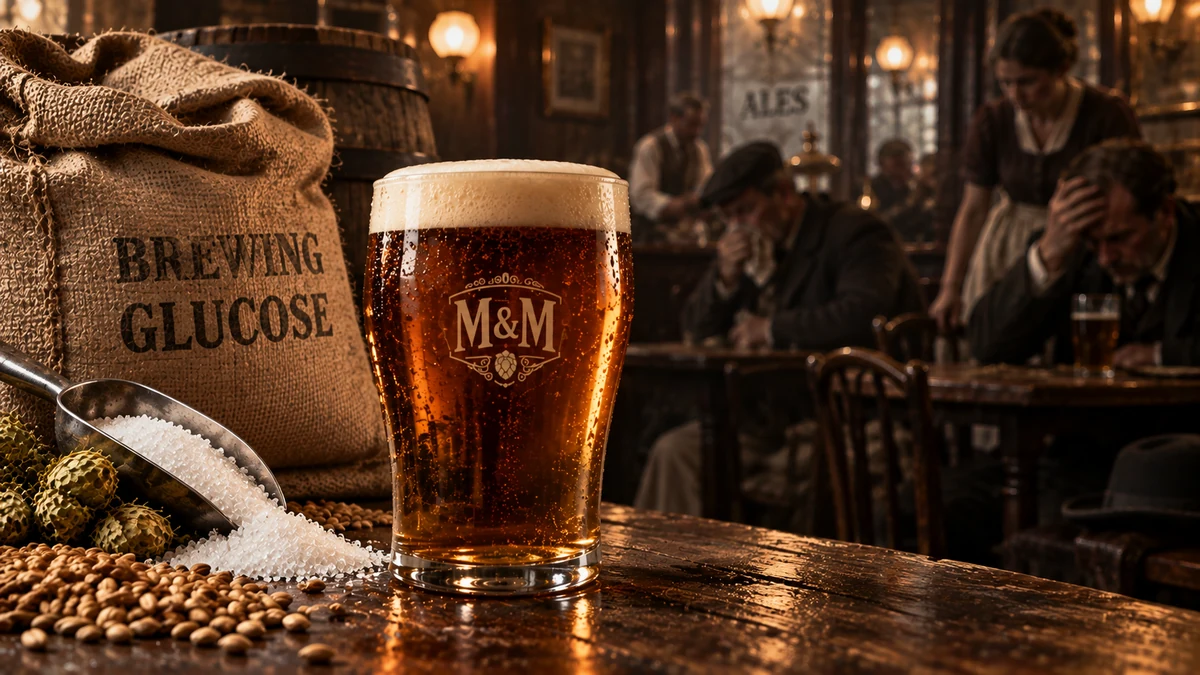
Brewers were using glucose made from starch, and sulphuric acid was used during its manufacture. Arsenic contamination in that industrial acid could pass into the glucose and, from there, into beer.
The chain was devastatingly simple:
contaminated sulphuric acid → brewing glucose → beer → drinker.
The brewers using the contaminated material did not know that poison had entered an ingredient. Neither did the people ordering their pints.
Investigators also examined other possible routes by which arsenic could enter brewing materials. The Royal Commission appointed after the outbreak investigated arsenic in beer and other foods and considered contamination associated with materials including brewing sugars and malt.
The disaster had exposed a much bigger problem:
you could not necessarily know what had happened to your beer before it reached the glass.
Beer Had Been Tampered With Before
The arsenic epidemic was an accidental contamination.
Beer adulteration was not.
Decades earlier, concerns about what was being added to British food and drink had become serious enough for chemists and government investigators to examine the problem.
One of the best-known critics was the chemist Friedrich Accum.
In 1820, he published A Treatise on Adulterations of Food and Culinary Poisons.
Beer received its own section.
Accum described a market in which foods and drinks could be altered to make products cheaper or to imitate qualities that customers expected. Later nineteenth-century investigations likewise found evidence that alcoholic drinks were being diluted or otherwise adulterated.
In 1831, London excise officers claimed that six to eight out of every ten porter brewers were adulterating their beer. Evidence given to parliamentary committees in the 1850s also found pub beer was often weaker than samples of the same beer obtained from breweries.
For the customer at the bar, the problem was simple:
the pint might not be what it claimed to be.
What Was Being Added to Beer?
Historical sources describe a variety of substances associated with beer adulteration.
Not all were poisonous, and they were not all used for the same purpose. Some adulterants were intended to replace or imitate more expensive ingredients, conceal dilution or alter bitterness and flavour.
One of the more troubling examples was cocculus indicus.
The plant contains picrotoxin, a toxic substance that acts on the nervous system. Historical research based on nineteenth-century sources reports that cocculus indicus was mixed into beer during this period.
That does not mean every Victorian pint was a chemical cocktail. But beer adulteration was real enough to produce prosecutions, parliamentary investigations and eventually stronger food regulation.
One Pint, One Very Sick Doctor
One particularly vivid case appeared in evidence to a British parliamentary investigation in 1854.
Physician Alphonse Normandy described drinking porter at a public house in Bermondsey, London.
He became violently ill with colic and vomiting.
Instead of simply avoiding the pub forever, Normandy returned the next day and obtained more of the porter for analysis.
According to his evidence, it contained iron sulphate.
It was a small episode compared with the disaster that followed in 1900.
But it illustrated the same disturbing problem:
the person drinking the beer had very little way of knowing what might actually be inside the glass.
Then 1900 Changed Everything
The arsenic beer poisoning of 1900 turned that danger into a national public-health scandal.
This was not a handful of suspicious pints.
Thousands of people became ill.
More than 70 died.
And the poison had travelled invisibly through an industrial supply chain before ending up in an everyday drink.
The British government appointed a Royal Commission on Arsenical Poisoning. Its reports, published between 1901 and 1903, investigated arsenic contamination in beer and other food and drink.
The outbreak showed how industrial food production could create risks far removed from the pub or brewery where the final product was sold.
A pint could depend on ingredients that had already passed through several hands before brewing even began.
In 1900, that chain failed catastrophically.
Was Beer Really Dangerous?
Usually, no.
Millions of people drank beer without being poisoned, and it would be misleading to imagine nineteenth-century Britain as a world where every pub served dangerous beer.
But adulteration was real.
Government investigations into it were real.
And the arsenic beer poisoning of 1900 was very real.
That is what makes the story remarkable.
The danger was not that beer itself was inherently poisonous.
The danger was that consumers had limited ways of knowing exactly what had happened to their beer before it reached their glass.
The Pint in Front of You
Today, beer drinkers might worry about freshness, storage, temperature or whether a pint has been poured properly.
Drinkers in 1900 faced a rather different possibility.
Their beer could look ordinary.
It could be sold as ordinary beer.
And it could still contain arsenic.
More than 6,000 cases of poisoning and more than 70 deaths were associated with the epidemic.
Sometimes the strangest stories in beer history are not myths at all.
Now you know.
Leave a Reply